
ORW Release Paths
Harrison County says female prison commitments enter ODRC at ORW for intake and classification. The county describes an average stay of 30 to 45 days before a move to a parent institution. That period is part of a state sentence. A new institution name therefore reflects continued ODRC custody unless the record separately shows Released or Adult Parole Authority supervision.
The Common Pleas judgment explains why county custody ended and prison custody began. ODRC then owns admission, institution, sentence, expected-date, release-detail, and supervision data. Use both sources to confirm identity and the Harrison case. The Harrison County release search path supplies the county-to-state custody fork.
| ORW record change | Correct meaning | Confirmation |
|---|---|---|
| Admission | State custody begins | ODRC detail and judgment |
| Parent institution | Internal prison transfer | Current ODRC institution |
| Expected date | Projection or eligibility point | ODRC definition and sentence |
| Released or APA | Prison exit or supervised status | Release detail and supervision fields |
Confirm ORW Release Records
Open the ODRC Offender Search and begin with a last name. Add first name, offender number, or County of Commitment to narrow a match. Women's offender numbers use a W prefix, and a leading zero is added when the number has only five digits. County of Commitment identifies the sentencing source.
Open the detail and compare offender number, docket, committing county, admission date, and institution. Read Status beside Parole or Release Detail. The Expected Release Date or Parole Eligibility Date is not an actual exit time. APA Supervision means the person has left prison under state supervision. Released is a different filter and should be checked against the populated release detail.
- Search ODRC by name or offender number.
- Match the Harrison commitment and docket.
- Read current institution and Status.
- Separate expected date from completed release detail.
- Check APA fields when supervision follows prison.
Important: A missing row is not proof of release. Ohio Reformatory for Women records must distinguish community release from continued custody.
ORW Records Contact
No verified ORW street address, phone, or public office hours appear in the reviewed official sources, so none are supplied here. ODRC Central Records is the documented request route for state sentence and release fields. Ask for precise public categories rather than an entire institutional file, because Ohio law restricts parts of an inmate file.
ODRC Central RecordsP.O. Box 430
Columbus, OH 43216
Use ODRC Offender Search for public status
Facility contact: confirm through ODRC
Supply the person's full name, offender number if known, Harrison County docket, and the exact fields sought. Useful fields include admission, institution history, sentence, expected date, parole or release detail, and public supervision information. The Harrison Common Pleas Clerk remains the source for the judgment and later judicial entries.
Note: No published Ohio Reformatory for Women fee, turnaround, or historical online release archive was found, so confirm terms before requesting copies.
ORW State Release Fields
Harrison's county roster is not the correct historical tool after ORW admission. Follow the woman through ODRC with the offender number where possible. Match the Harrison commitment and docket before relying on institution, date, or supervision data.
| ODRC field | What it establishes |
|---|---|
| Admission Date | Entry to the state system |
| Institution | Listed ODRC placement |
| Expected Release or Eligibility | Projection or parole point |
| Parole or Release Detail | Later prison exit information |
| APA Supervision | State supervision after prison |
Use Harrison Common Pleas for the sentence and later judicial entries. A move within ODRC is a transfer. A populated release detail or Released status is stronger evidence of departure, while APA Supervision confirms that state oversight continues outside prison.
ORW Parent Prison Transfers
ORW is an intake site. A move from ORW to a parent institution remains inside ODRC. During classification, a search result may change institution names, and that movement should be recorded as transfer rather than release. Continue following the same offender number across the state system.
A later prison departure requires release detail, Status, and any APA supervision fields. Match the state record to the Harrison judgment so a namesake or unrelated sentence is not used. If online data appear wrong, direct the correction to ODRC, which owns the state fields.
- Transfer
- Movement to another custodian while confinement continues.
- Community release
- Departure from custody rather than a move to another jail or prison.
- Disposition
- The recorded reason and destination attached to the exit event.
ORW State Commitments
Harrison's Jail Division says women sentenced through Common Pleas enter ODRC through the Ohio Reformatory for Women. The county describes an average intake and classification stay of 30 to 45 days before transfer to a parent institution. That move ends county-jail custody but begins state-prison custody. It is not a community release.
Once ODRC receives the commitment, search by name or offender number and narrow with County of Commitment. The state record can show admission, institution, status, sentence, expected release or parole eligibility, later release detail, and Adult Parole Authority supervision. During intake, the institution name may change. The Common Pleas judgment remains the source for why Ohio Reformatory for Women custody ended and state custody began.
ORW Offender Search Fields
ODRC accepts Last Name, First Name, County of Commitment, Residential County, ZIP, Status, next hearing month, and offender number. Search broad first, then narrow. Residential County and ZIP apply to certain supervision or violator records and do not identify the sentencing county.
The detail may show status, photo, admission, institution, offenses, sentence, jail credit, expected date or eligibility date, reviews, release detail, APA office, and conditions. Offense data may be incomplete, so verify the Harrison judgment.
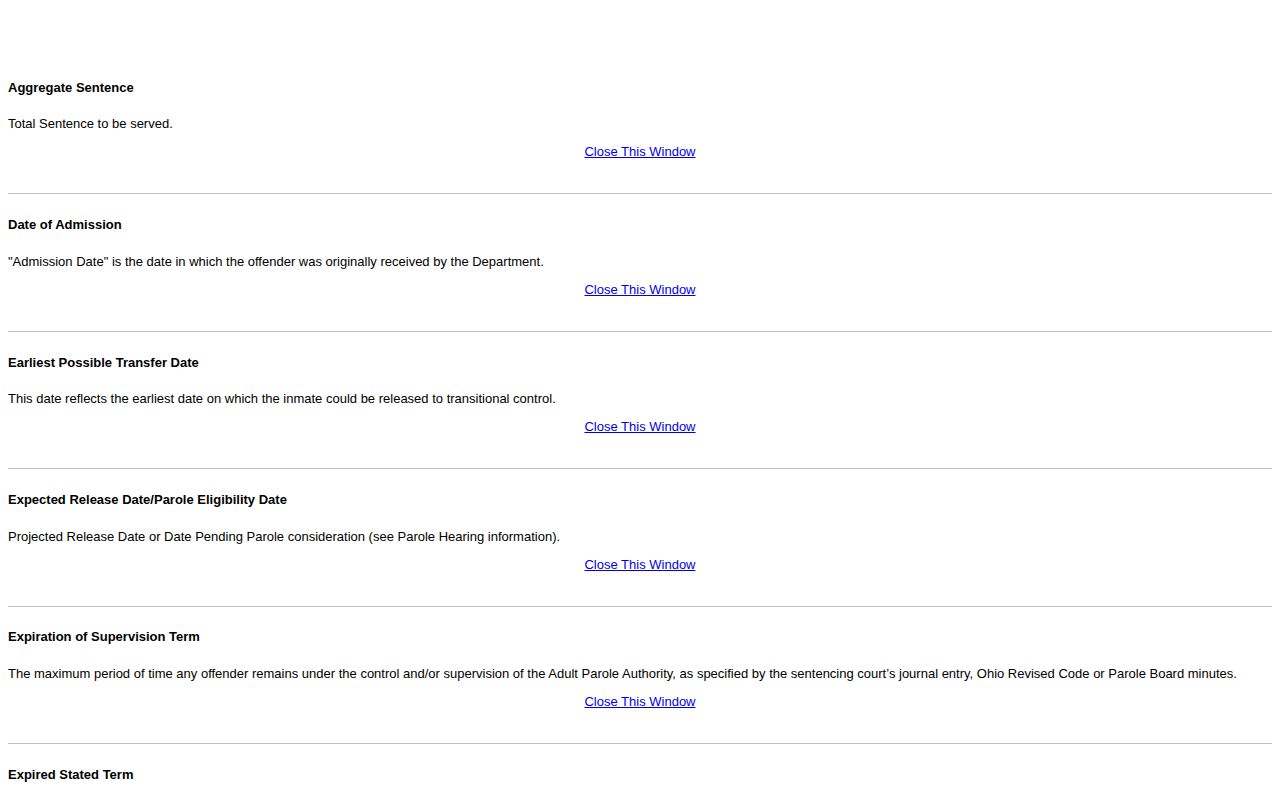
The ODRC definitions page explains the public date and status terms.
The search form shows why a Harrison commitment should be narrowed with both identity and custody fields.
Note: ODRC can lag, and its expected date is not proof that release has occurred.
Get ORW Release Proof
The strongest local result combines two sources. Ask Ohio Reformatory for Women for the custody event, including the actual date, time, disposition, and destination. Then obtain the matching court entry that authorized bond, dismissal, sentence completion, commitment, judicial release, or another outcome. The sources may post at different times. Keep the report date and identifiers so a later update can be reconciled.
If the event was a transfer, continue with the receiving agency instead of closing the search. If it was an ODRC commitment, use the state offender number when available. If it was a true community release, check the docket for any pending case dates or supervision terms. Precise wording matters: say released from Ohio Reformatory for Women only when the record shows custody ended, and name the next custodian when it did not.
The Harrison County Clerk of Courts holds the felony judgment that placed a woman in ODRC custody. Read the term, jail-time credit, committing docket, and any later modification before interpreting the state result. A Judicial Release entry can create community-control conditions, while a revocation can return the case to custody. The court explains the authority. ODRC shows how the state system recorded admission, movement, prison departure, and state supervision.
The official Harrison Jail Division page identifies ORW as the intake route and describes the average classification interval. It does not set an individual release date or guarantee that the institution remains unchanged. Preserve the woman's W-prefixed offender number and use it through later searches. When a release detail appears, compare its date and disposition with the court record and any APA fields. If the result instead names another institution, describe that event as an ODRC transfer.
A photo or matching name is not enough to connect a state record to the Harrison case. Compare the offender number, committing county, docket, sentence, admission date, and institution. ODRC cautions that offense information may be incomplete and that a supervision term can relate to an earlier offense. If a field appears wrong, send ODRC the public detail URL, offender number, disputed text, and supporting order. The Harrison sheriff cannot amend ORW release or supervision data.