
Harrison Parole and Probation
Parole, post-release control, probation, and pretrial release can all place a person in the community under rules. They do not come from the same office. Ohio's Adult Parole Authority, or APA, is part of the Ohio Department of Rehabilitation and Correction under Ohio Revised Code 5149.02. It handles state parole, post-release control, and some judicial-release supervision. Harrison County Court handles misdemeanor and traffic probation. Common Pleas Community Corrections handles felony-level local supervision and related programs.
A person can be released from the Harrison County Jail on bond and still have a pending case. Common Pleas also has a Pre-trial Release Program. That program gathers information for release recommendations and supervises defendants before trial. It is not parole, and it is not proof that a sentence was completed. Court entries establish the order, while the named office confirms the active supervision record.
Probation may be imposed without a state prison stay. Parole follows an eligible prison term, while post-release control follows certain prison sentences under a different legal framework. Community control is the broader Ohio court term for sanctions served outside prison. These distinctions affect the search. A county probation record will not become an APA record simply because both involve reporting, and a prison release can remain under APA supervision even after the custody status changes.
| Supervision type | Who orders it | Where to verify |
|---|---|---|
| Parole | Ohio parole process after an eligible prison term | ODRC Offender Search and the listed APA office |
| Post-release control | State sentence framework after prison | ODRC status, supervision dates, office, and conditions |
| County probation | Harrison County Court | County Court CaseLook probation tool and court office |
| Community control | Harrison Common Pleas Court | Journal entry and Community Corrections |
| Pretrial release | Court while a case is pending | Docket and Pre-trial Release Program |
Check Harrison Post-Release Supervision
Start with the case type, not a guess about the label. A prison commitment points toward ODRC and APA. A misdemeanor or traffic case points toward County Court. A Common Pleas felony may involve Community Corrections, APA, or both at different stages. Names alone can match more than one person, so compare the docket, offender number, committing county, and supervision dates before drawing a conclusion.
- Search the ODRC Offender Search. Use the person's last name first, then narrow by first name or County of Commitment.
- Select APA Supervision for people released from state prison under ODRC oversight. Open the detail record and compare Supervision Start Date, Period of Supervision, APA Office, and public Conditions.
- Search the Harrison County Court probation tool for a misdemeanor or traffic matter. Use the court docket to confirm the case and order.
- For a Common Pleas felony or judicial release, read the signed journal entry and contact Community Corrections. The entry should identify the legal basis and conditions.
- Confirm the result with the supervising office. An online address can lag, and an old case must not be treated as active supervision without a current record.
The ODRC search distinguishes County of Commitment from Residential County. The first relates to the sentencing source. The second searches selected APA and Violator at Large records using a recorded residential area. It is not a live location tool. The full release-record and court confirmation path is available on the Harrison County released inmate search.
Harrison County Community Corrections
Harrison has a substantial local supervision layer apart from the state APA. The Community Corrections programs include intensive and basic probation, pretrial release, education, community service, electronic monitoring, and program referrals. That distinction matters because a person released under a county order may never appear under an APA Supervision filter. Searching only ODRC would miss the office with the active record.
The Common Pleas journal entry supplies the legal authority. Community Corrections supplies the practical supervision record. That distinction is vital for judicial release, which can include community-control terms or residential programming. Harrison identifies Eastern Ohio Correction Center as a possible program placement in some judicial-release matters. Placement there is structured correctional custody, not an unconditional return home.
The Community Corrections staff listing helps route an inquiry to the proper unit. Ask whether the public record shows active supervision, its general type, and the correct contact office. Do not assume the staff member who handled an earlier stage still owns the case.
Common Pleas Community Corrections
100 West Market Street, second floor
Cadiz, OH 43907
740-942-8510
Felony probation, community control, pretrial release, and local programs
Harrison County Court Probation
100 West Market Street, Department 105
Cadiz, OH 43907-1132
740-942-8782
County Court misdemeanor and traffic probation
The official Harrison County program page shows how broad the local layer is.
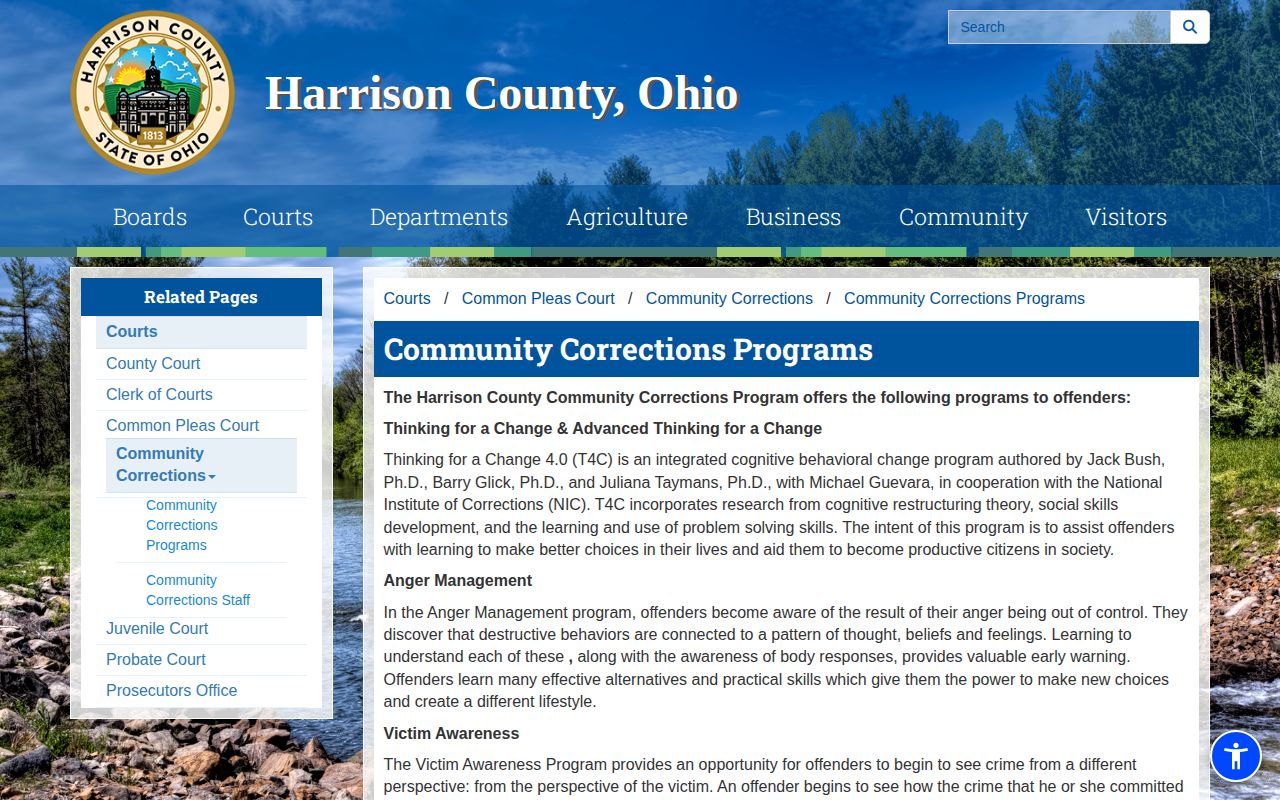
The image identifies county-run supervision resources that are separate from Ohio APA records.
Note: Office records and the signed court order should agree before a supervision status is treated as current.
Harrison Supervision Terms Defined
Similar labels can hide different legal stages. The source that imposed the status usually controls which office can confirm it. These definitions keep a custody release separate from the end of legal supervision.
- Parole
- Conditional release from an eligible prison sentence, followed by APA supervision.
- Probation
- Court-ordered community supervision, often used instead of or after local confinement.
- Post-release control
- State supervision that follows release from certain Ohio prison terms.
- Discharge
- The formal end of a sentence or supervision obligation, not merely departure from a facility.
- Absconder
- A supervised person alleged to have stopped reporting or left supervision without authority.
A release notice shows a custody event. A discharge entry answers the later question of whether supervision ended. If the terms conflict across sources, compare the court order, ODRC detail, and supervising office rather than relying on the shortest status label.
Harrison Warrants and APA Absconders
Harrison's warrant sources expose three distinct paths. The Sheriff's outstanding-warrant page provides a local warrant list. County Court CaseLook has a separate active-warrant tool for its cases. ODRC uses Violators at Large, or VAL, for alleged APA absconders. None of those categories is a current-jail roster.
A local warrant may arise after a person was released and remains outside custody. A VAL entry means the APA alleges a supervision violation and the person is at large. ODRC warns that the address shown is the last recorded address, not a verified current location. Likewise, absence from a warrant tool does not establish that supervision ended or that no other court issued process.
The ODRC definitions explain VAL and the state supervision fields. Use the offender number and Harrison case details to distinguish a true match. Then contact the office shown on the record for current public status.
The official sheriff page shows one local warrant route.
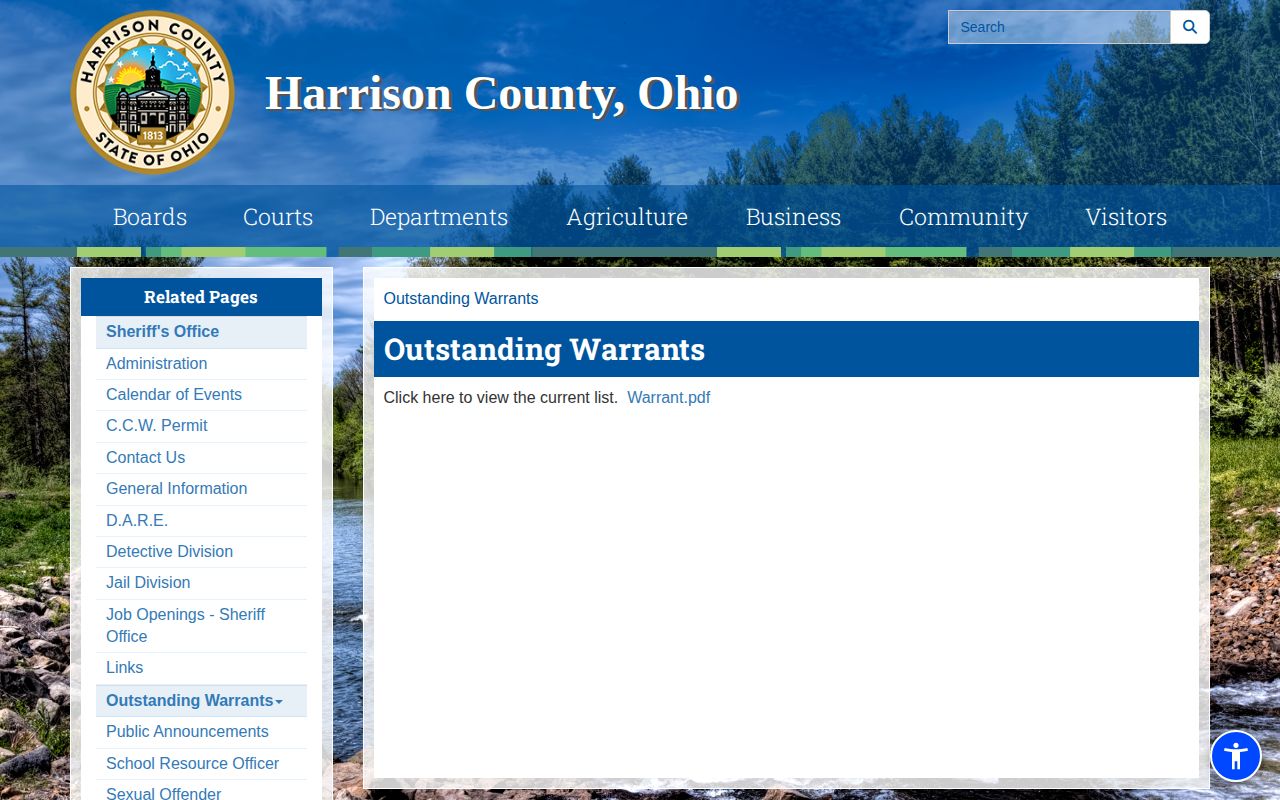
It should be read as legal-status information, not proof of confinement or an APA designation.
Harrison Release Conditions and Violations
Conditions are the rules attached to supervision. Public ODRC details may show a supervision office and conditions, while local terms appear in the court order and Community Corrections record. Common examples in Harrison's documented programs include reporting, education, community service, electronic monitoring, and referrals. The exact order controls. General program descriptions do not prove that every condition applies to one person.
A claimed violation can lead to a hearing, a warrant, added conditions, or return to custody. The docket records court action in local matters. ODRC and APA records address state supervision. VINE can send certain custody or state-event notices, but it is not the source for the legal decision. A transfer alert also is not a discharge from supervision.
For a county case, read the docket in sequence. A violation allegation, hearing notice, warrant, ruling, and termination are separate events. For an APA case, compare status and release detail with any public determination or order. This prevents a pending allegation from being described as a final finding and keeps a later custody event separate from the original Harrison release.
| County condition or violation | Check the signed County Court or Common Pleas entry and local supervising office. |
|---|---|
| APA condition or violation | Check ODRC detail, public APA status, and the listed field office. |
| Warrant status | Use the issuing court or sheriff path, then verify whether it remains active. |
| Return to custody | Confirm with the custodian; a warrant alone does not show booking. |
Confirm Harrison Supervision Discharge
Supervision ends through a formal discharge, completion, or other lawful order. Do not infer it from the passage of an estimated period. An ODRC record may show a period of supervision and later release detail. A local case may show termination, completion, revocation, or a modified order in the court docket. The supervising office can identify the public record that confirms the end date.
Ohio law restricts parts of parole, probation, community-control, and post-release-control files. Public access therefore may be narrower than the full agency record. Request defined fields or public orders rather than an entire case file. If the web display is unclear, ask for the discharge order or public status confirmation and cite the person, case, and offender number.
Note: A completed jail term, ended probation case, and discharged APA record are separate events and may have different dates.